
Sustainability Trends in Outdoor Careers 2025

By 2025, the outdoor industry is deeply focused on environmental responsibility, creating new jobs and reshaping existing roles. Companies are responding to consumer expectations for measurable environmental action, government policies, and climate challenges. Key trends include:
- Renewable Energy Projects: Jobs in wind, solar, and land stewardship are growing, blending outdoor skills with technical expertise.
- Circular Gear Production: Repair technicians, carbon analysts, and circular operations managers are in demand as brands prioritize durability and transparency.
- Eco-Tourism Growth: Roles like regenerative-tourism planners and eco-lodge managers focus on improving ecosystems and supporting local communities.
- Conservation and Land Management: Positions like trail technicians and restoration ecologists address climate stress on public lands.
Skills like carbon accounting, GIS, and regulatory literacy are essential. Certifications such as OSHA safety training, Leave No Trace credentials, and sustainability reporting training boost employability. Platforms like Get Outdoor Jobs help professionals find roles in conservation, renewable energy, and circular economy initiatives. The outdoor job market now rewards expertise in balancing outdoor recreation with environmental care.
Exploring Green and Blue Career Pathways: Opportunities for a Sustainable Future
What's Driving Sustainability in Outdoor Careers
Not sure what outdoor role fits you?
Take our 2-minute career quiz to get matched with outdoor jobs that align with your goals, salary target, and lifestyle.
The outdoor job market in 2025 is undergoing a transformation, driven by environmental challenges, shifting consumer expectations, and evolving government policies. These factors are reshaping how businesses and organizations operate, creating a closer link between ecological issues and the workforce.
Climate Change and Resource Scarcity
Outdoor industries and public land managers are grappling with the impacts of climate change every day. Extreme weather events, shorter seasons, and stressed ecosystems are becoming the norm. For example, wildfires are forcing trail closures, unpredictable snowfall is cutting ski seasons short, and drought is reducing river flows crucial for rafting. Wildlife tourism is also feeling the strain as habitat loss disrupts ecosystems. To address these issues, organizations are investing in efforts like climate adaptation, trail hardening, erosion control, wildfire fuel reduction, and habitat restoration to ensure outdoor spaces remain safe and accessible.
The numbers speak volumes. In 2024, 181.1 million Americans participated in outdoor recreation, marking a 3% increase from the previous year. This growing demand for outdoor activities, combined with climate stress, is driving the need for professionals like conservation scientists, restoration technicians, climate adaptation planners, and land stewards. Public agencies, land trusts, tribal nations, and nonprofits are stepping up by expanding their crews to focus on climate-smart land management, such as drought-resilient forestry and floodplain restoration near high-traffic recreation areas.
Consumer Demand for Eco-Friendly Practices
Consumers are no longer satisfied with surface-level green initiatives - they expect real, measurable environmental action. This demand is pushing outdoor brands to adopt transparent practices and focus on genuine sustainability.
Take Arc'teryx ReBird, for instance. This program emphasizes repairs and certified-used gear, showcasing how circularity and product longevity are becoming central to business strategies rather than just marketing buzzwords. These shifts are creating opportunities across various roles, including program management, operational oversight, and reporting for repair, resale, and rental initiatives. Marketing teams are also evolving, seeking professionals who can craft compelling, data-driven narratives about their environmental efforts.
Government Policies and Certification Standards
Federal investments are playing a significant role in shaping outdoor careers. Billions of dollars are being funneled into projects focused on infrastructure, climate resilience, and conservation. Agencies like the National Park Service, U.S. Forest Service, Bureau of Land Management, and NOAA are using this funding to upgrade trails and facilities, mitigate wildfires, restore watersheds, and enhance coastal resilience. These projects are fueling demand for field technicians, project managers, scientists, and seasonal crews.
Renewable energy incentives are another game-changer. The U.S. is accelerating wind, solar, and transmission projects on rural and public lands, which has led to new roles in site assessment, environmental compliance, habitat mitigation, and community engagement. Meanwhile, initiatives like the Outdoor Industry Association's 2025 goals are helping brands cut greenhouse gas emissions, eliminate harmful chemicals, and adopt safer alternatives in their supply chains. Certifications such as B Corp are also driving demand for specialists in sustainability analytics, ESG reporting, product stewardship, and materials compliance. Together, these policies and standards are fueling the need for sustainability expertise across the outdoor industry.
New Sustainability Trends in Outdoor Jobs
These trends take the idea of environmental drivers and turn them into real-world job opportunities, combining classic outdoor skills with specialized environmental expertise.
Renewable Energy Projects
The surge in renewable energy projects is reshaping outdoor work. Solar farms and wind installations on public lands are growing rapidly, requiring a blend of field expertise and clean-energy knowledge. For example, wind-turbine technicians scale towers - some over 200 feet high - to inspect, maintain, and repair turbines in all kinds of weather. Similarly, solar photovoltaic (PV) installers work outdoors assembling and mounting panels, checking electrical connections, and testing system performance. Environmental compliance assessors play a critical role by monitoring project sites to evaluate wildlife impacts, wetland disturbances, and erosion risks, ensuring projects meet permitting standards.
These jobs demand a mix of traditional outdoor skills - like navigation, equipment handling, and working at heights - with more specialized knowledge such as turbine mechanics, photovoltaic systems, and safety protocols. Certifications like OSHA 10/30, tower-climbing credentials, or NABCEP are often required. Additionally, some renewable projects hire crews focused on vegetation and land stewardship to maintain pollinator-friendly habitats and native grasslands around solar arrays.
Eco-Friendly Outdoor Gear Production
The outdoor gear industry is shifting toward creating products designed to last longer and reduce waste. Circular business models are becoming the norm, leading to a rise in jobs for repair technicians who fix jackets, replace zippers, and refurbish gear either in retail stores, warehouses, or even on-the-go at festivals, trailheads, and ski resorts. Mobile repair teams, in particular, are gaining popularity for offering quick fixes on-site.
Behind the scenes, analysts calculate carbon footprints for products, tracking emissions from raw materials to manufacturing, transport, and disposal. This data helps brands provide transparent climate impact information and work toward net-zero goals. Circular operations managers are also key players, managing trade-in programs and ensuring returned items are repaired, resold, or recycled. These efforts reflect changing consumer expectations: 81% of people expect companies to actively improve the environment, while 52% have noticed misleading sustainability claims from brands. By prioritizing repairability and transparency, the gear industry is setting a new standard for environmental responsibility.
Eco-Tourism and Regenerative Tourism Growth
Eco-tourism is evolving into regenerative tourism, which not only minimizes harm but actively improves ecosystems and supports local communities. This shift has created roles like regenerative-tourism planners, who design trips that include habitat restoration, citizen science projects, and conservation partnerships. Habitat-restoration coordinators organize hands-on activities such as removing invasive species, replanting native vegetation, controlling erosion, and rehabilitating trails.
Eco-lodge sustainability managers are tasked with improving energy and water efficiency, reducing waste, and promoting local sourcing at outdoor destinations. Meanwhile, eco-guides now take on more responsibilities, requiring knowledge in Leave No Trace principles, basic ecology, and restoration techniques. Their work involves managing group sizes, sticking to durable surfaces, minimizing waste, choosing low-emission transportation, and educating guests about local conservation challenges. This evolution transforms their role from simply leading adventures to becoming educators, stewards, and active contributors to environmental restoration.
sbb-itb-9d004f0
How Sustainability Affects Outdoor Workplaces
With growing environmental concerns and shifting regulations, sustainability has become a core element of operations for outdoor organizations. It’s no longer an optional initiative - it’s shaping how companies hire, operate, and build their workplace culture. In the U.S., outdoor brands are now embedding sustainability into their hiring practices, seeking candidates with expertise in areas like environmental management, ESG reporting, and circular economy principles. Job postings often highlight climate goals, circularity initiatives, and public lands advocacy, while interviews explore candidates’ knowledge of sustainable operations and certifications such as LEED or B Corp. This shift is driven by consumer demand and the values of younger professionals who prioritize sustainability when choosing employers. These evolving trends are redefining company strategies, employee expectations, and daily operations.
Company Sustainability Goals
Outdoor companies are creating specialized roles to meet their environmental commitments. Sustainability coordinators focus on the day-to-day, such as collecting emissions data from warehouses and stores, training staff on eco-friendly practices, and managing recycling programs. On a broader level, environmental program managers develop long-term plans, set targets for climate and materials, and oversee third-party audits and certifications. For instance, as brands phase out PFAS from their products, they rely on chemical compliance specialists and material sustainability engineers to identify safer alternatives and ensure proper testing.
What Employees Want from Employers
Employee values are also driving these changes. Younger workers, particularly Millennials and Gen Z, expect more than just green marketing - they want to see real action. Many scrutinize a company’s impact reports, material choices, and public lands advocacy before applying or accepting a position. They’re drawn to tangible efforts like paid time off for trail work, matching donations for environmental causes, and opportunities to participate in stewardship days on public lands. Other sought-after practices include travel policies that prioritize lower-emission options, support for bike commuting or public transit, and stipends for eco-friendly gear or repairs. Transparency is key - employees want regular updates on progress toward sustainability goals and open channels to flag unsustainable practices.
Daily Sustainability Practices
Sustainability is now part of the daily routine in outdoor workplaces. Field programs incorporate Leave No Trace principles, plan low-impact routes, and minimize waste. Retail and gear operations focus on green procurement, reduced packaging, and repair services to extend product life, aligning with the circular economy trends in outdoor apparel. Offices and warehouses are adopting energy-efficient lighting, improved insulation, and digital workflows to reduce paper use. Even events are managed with sustainability in mind - organizers limit group sizes to protect sensitive areas, use reusable or compostable food service items, avoid single-use plastics, and ensure thorough site restoration. These efforts are often coordinated by program managers, trip leaders, and event planners, with support from sustainability coordinators who develop checklists, vendor standards, and post-event impact reviews.
To make these practices effective, staff need a basic understanding of climate issues, familiarity with company sustainability goals, and hands-on skills like waste sorting and low-impact field techniques. Product and retail employees also benefit from knowledge about materials, repair options, and circular programs, enabling them to guide customers toward sustainable choices. Employers are addressing this need with onboarding sessions focused on sustainability, regular training tied to new initiatives - such as PFAS-free product launches - and internal resource hubs that provide clear guidelines and best practices.
Career Opportunities in Outdoor Sustainability
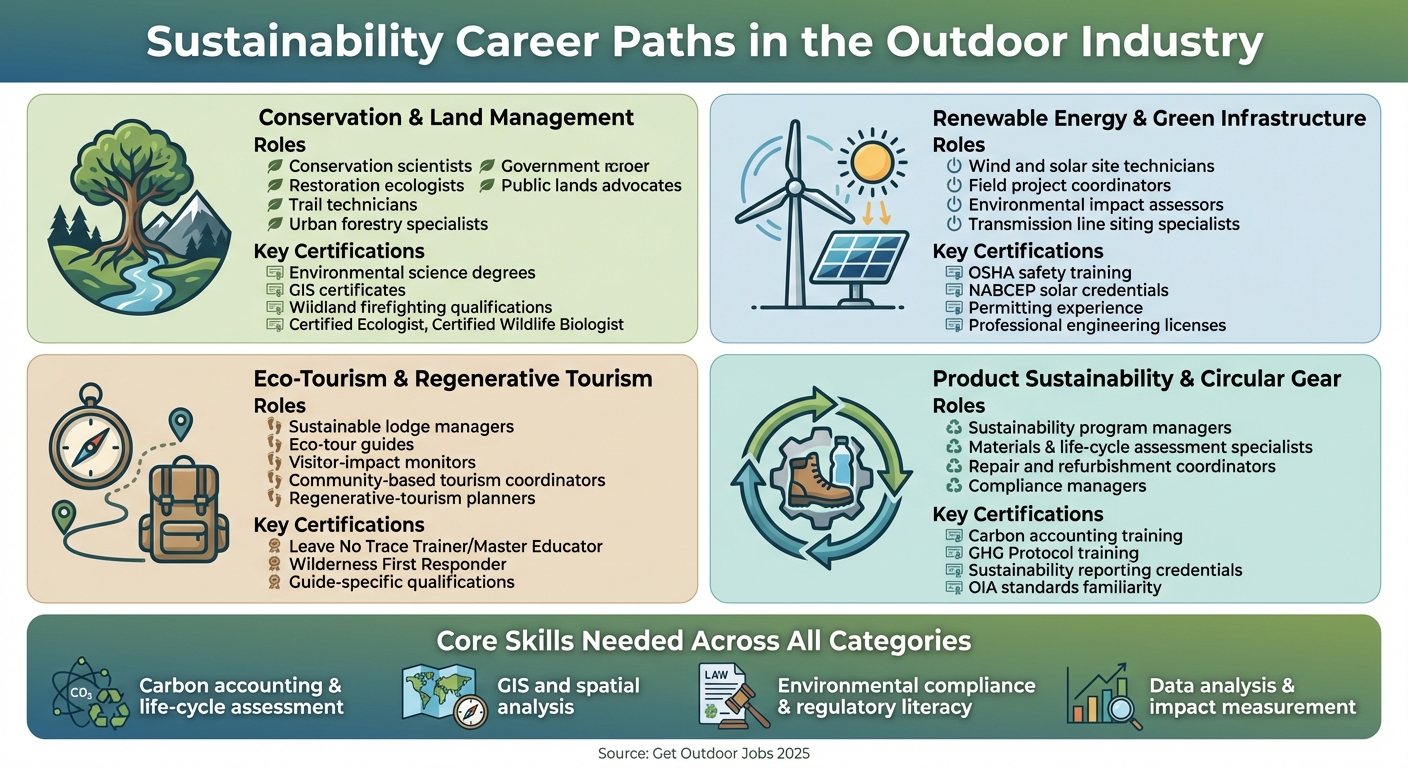
4 Key Sustainability Career Paths in Outdoor Industry 2025
As the outdoor industry embraces sustainability, new career paths are emerging to meet the growing demand for environmentally conscious practices.
Types of Sustainability Roles
By 2025, sustainability-focused roles in the outdoor sector can be grouped into four key categories.
- Conservation and land management: These positions include conservation scientists, restoration ecologists, trail technicians, urban forestry specialists, and public lands advocates. They address the increasing strain on U.S. public lands and ecosystems.
- Renewable energy and green infrastructure: This category includes wind and solar site technicians, field project coordinators, environmental impact assessors, and transmission line siting specialists. These roles balance the expansion of clean energy with the need to protect natural habitats.
- Eco-tourism and regenerative tourism: Jobs like sustainable lodge managers, eco-tour guides, visitor-impact monitors, and community-based tourism coordinators create low-impact travel experiences while supporting local conservation efforts.
- Product sustainability and circular gear: These roles involve sustainability program managers, materials and life-cycle assessment specialists, repair and refurbishment coordinators, and compliance managers. They focus on eliminating harmful chemicals like PFAS and developing take-back programs for outdoor apparel and equipment.
Within outdoor brands, product sustainability roles are seeing significant growth. Professionals in this area work on integrating recycled or bio-based materials, designing gear for durability and repair, and managing take-back and refurbishment programs.
Required Skills and Certifications
Sustainability-focused careers demand a mix of technical skills and certifications across all categories.
-
Core technical skills:
- Carbon accounting and life-cycle assessment are critical for measuring emissions and product impacts, ensuring accurate sustainability reporting.
- GIS and spatial analysis are invaluable for mapping habitats, recreation patterns, and potential conflicts, particularly for conservation planners and renewable energy teams.
- Environmental compliance and regulatory literacy ensures adherence to laws governing land use, wildlife protection, chemical safety, and product standards.
- Data analysis and impact measurement enable organizations to track visitor impacts and progress toward sustainability goals.
-
Certifications by role:
- For conservation and field ecology, credentials like environmental science degrees, GIS certificates, wildland firefighting qualifications, and certifications such as Certified Ecologist or Certified Wildlife Biologist are highly valued.
- Renewable energy and compliance roles often require OSHA safety training, permitting experience, NABCEP solar credentials, and in some cases, professional engineering or geology licenses.
- In eco-tourism, certifications like Leave No Trace Trainer or Master Educator, Wilderness First Responder, and guide-specific qualifications enhance employability while promoting low-impact practices.
- For product and corporate sustainability, training in carbon accounting or sustainability reporting (such as GHG Protocol training) and familiarity with standards like those from the Outdoor Industry Association are increasingly sought after.
These skills and certifications equip professionals to step into a wide range of sustainability-focused roles.
Finding Sustainability Jobs with Get Outdoor Jobs
To help professionals navigate these opportunities, Get Outdoor Jobs compiles thousands of outdoor industry postings daily. Their platform offers advanced search filters, keyword searches, and options for remote, hybrid, or onsite roles. Use terms like "sustainability", "conservation", "renewable energy", "eco-tourism", "public lands", or "circularity" to refine your search.
The site highlights conservation and wildlife biologist roles, along with positions in environmental services, adventure guiding, and administrative work tied to sustainability initiatives.
For better results, set up job alerts with sustainability-related keywords to receive daily notifications for new openings. Use the remote filter to find flexible roles like ESG analysts or sustainability coordinators that can be done from anywhere. Premium subscribers gain access to advanced filters, daily updates, and email alerts, making it easier for mid-career professionals to transition into roles like sustainability coordinator, repair program manager, or impact specialist.
Conclusion
The outdoor industry in 2025 is undergoing a major shift, with sustainability becoming a non-negotiable part of doing business. This shift has opened up entirely new career paths, including roles in compliance, circular economy management, and assessing environmental impacts.
Jobs in renewable energy, eco-tourism, and circular economy projects are some of the fastest-growing areas within outdoor sustainability. These roles require a mix of traditional outdoor skills and newer expertise like carbon accounting, life-cycle assessments, and navigating regulatory frameworks. With record participation, sustainability-focused roles are no longer limited to hardcore adventure enthusiasts - they’re now spreading into recreational and wellness industries.
Leading brands have made repair programs, resale options, and take-back systems central to their operations. This shift calls for professionals who not only understand outdoor gear but also have a strong grasp of environmental science, transparent supply chains, and effective ways to communicate environmental impact.
Platforms like Get Outdoor Jobs are capitalizing on these trends by connecting job seekers to thousands of sustainability-focused roles in areas like conservation, renewable energy, eco-tourism, and corporate sustainability. The job market in 2025 rewards those who combine hands-on outdoor experience with a solid understanding of sustainability. With tools like advanced filters and daily updates, these platforms make it easier for candidates to find roles that align with their environmental values while staying equipped with the skills needed for long-term success.
FAQs
What key skills are needed for sustainability-focused careers in the outdoor industry?
To thrive in sustainability roles within the outdoor industry, professionals need a well-rounded combination of technical know-how and interpersonal abilities. A solid foundation in environmental knowledge is essential - this includes expertise in areas like renewable energy, conservation efforts, and sustainable tourism practices. Proficiency with tools such as GIS (Geographic Information Systems) or carbon footprint analysis can also provide a significant edge.
On the other hand, strong communication and collaboration skills are just as important. Many positions require engaging with a variety of stakeholders, ranging from local communities to government organizations. The ability to adapt and solve problems is key when tackling the distinct challenges posed by outdoor environments. For those aiming for leadership roles, having experience in project management and strategic planning can be a game-changer.
How is the outdoor gear industry responding to the growing demand for sustainable practices?
The outdoor gear industry is stepping up its efforts to go green, responding to growing consumer interest in sustainability. Many brands are now using recycled materials like repurposed plastics and fabrics in their products. On top of that, they're working to cut down on carbon emissions by streamlining supply chains and tapping into renewable energy for production.
Another big focus is on durability and repairability. By designing products that last longer and can be fixed, companies are encouraging people to buy less and make their gear go the distance. Certifications such as Fair Trade and bluesign® are also gaining traction, making it easier for shoppers to choose products that are both environmentally and socially responsible. These changes show a clear dedication to preserving the natural landscapes that outdoor enthusiasts hold dear.
How do government policies influence sustainability-focused careers in the outdoor industry?
Government policies have a big impact on shaping careers tied to sustainability in the outdoor industry. Regulations and incentives often encourage projects like renewable energy development, conservation programs, and eco-tourism, which, in turn, create job opportunities. For instance, federal funding for renewable energy infrastructure or grants aimed at conservation efforts can open up roles in these areas.
Specific policies, such as the Clean Energy Tax Credit or initiatives to preserve national parks, also support the growth of environmentally focused professions. These include jobs like environmental scientists, renewable energy technicians, and eco-tourism guides. By focusing on sustainability, government actions not only grow these job markets but also safeguard natural resources for the future.