
Avoiding Burnout While Working Seasonal Jobs

Burnout is a serious issue for seasonal workers, especially in physically demanding roles with long hours and unpredictable schedules. It can lead to exhaustion, strained relationships, and health problems. Here’s how to prevent burnout and protect your well-being:
- Set Boundaries: Stick to defined work hours and avoid overcommitting to extra shifts.
- Take Breaks: Use short breaks (5–15 minutes) to recharge during busy periods.
- Prioritize Sleep: Aim for 7–9 hours of sleep nightly to recover energy.
- Daily Wellness Habits: Eat balanced meals, stay hydrated, and include 30 minutes of physical activity.
- Recognize Burnout Signs: Watch for persistent fatigue, emotional detachment, or difficulty concentrating.
- Use Employer Resources: Explore mental health support, flexible schedules, or wellness programs if available.
- Choose the Right Employer: Look for companies that emphasize worker well-being and offer support like housing assistance.
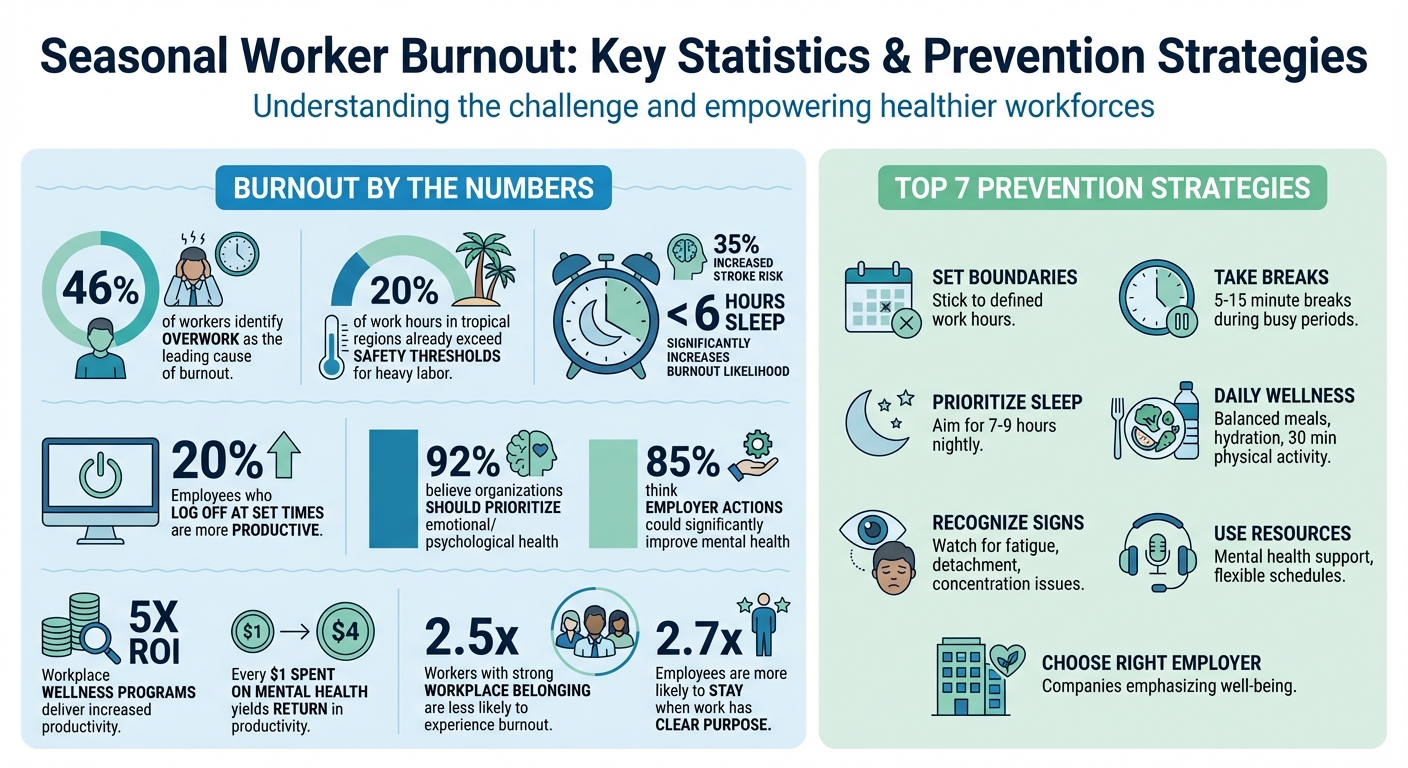
Seasonal Worker Burnout Statistics and Prevention Strategies
What Causes Burnout in Seasonal Jobs
Long Hours and High-Intensity Work
Seasonal jobs often compress months of work into a short timeframe, creating periods of intense activity with heavy workloads and tight deadlines. Workers in these roles frequently face extended shifts and minimal downtime. Many feel compelled to take on overtime to maximize their earnings during the limited work season. On top of that, temporary employees are often expected to perform at the same level as full-time staff, despite receiving limited training. It's no surprise that 46% of workers identify overwork as the leading cause of burnout.
Not sure what outdoor role fits you?
Take our 2-minute career quiz to get matched with outdoor jobs that align with your goals, salary target, and lifestyle.
Adding to the challenge, the work environment itself can exacerbate the strain.
Weather and Physical Demands
For those in outdoor seasonal roles, the combination of constant physical labor and extreme weather conditions can be grueling. Whether it’s lifting heavy items in warehouses, carrying trays in hospitality, or leading outdoor activities, the physical toll is significant. Extreme temperatures, whether hot or cold, push the body into stress mode, making fatigue even worse. For instance, severe heat or cold can trigger physiological responses that sap energy. The statistics are sobering: nearly 20% of work hours in tropical regions already exceed safety thresholds for heavy labor due to heat and humidity. With just a small temperature rise - 1°C (about 2°F) - around 800 million people in these areas could face conditions where heavy work is unsafe for half the year.
The physical effects of burnout are hard to ignore, with symptoms like persistent headaches, muscle tension, digestive problems, and extreme fatigue. But the impact doesn’t stop at the workplace; it spills over into personal life.
Disrupted Personal Time and Relationships
The temporary and demanding nature of seasonal work often leaves little room for personal downtime, which can strain relationships. Physically exhausting tasks and irregular hours - like late-night hospitality shifts that end at 2:00 AM - make recovery and maintaining social connections nearly impossible. This lack of time and energy erodes social support systems. Jillian Millkey, a Safety Officer and former guide, describes the experience vividly:
Before you know it, you're in this pit... Your community's dissolving, and you're stuck there, trying to remember how to climb out of this hole you've just dug for yourself.
This sense of isolation only deepens the stress. Recognizing these challenges is a critical step toward addressing burnout in seasonal jobs effectively.
sbb-itb-9d004f0
How to Prevent Burnout
Regaining control of your time and energy is essential to staying productive and avoiding burnout. These strategies can help you maintain balance and perform at your best, even during busy periods.
Set Clear Limits on Work Hours
Define specific start and end times for your workday, aligning them with your natural energy levels, and stick to these boundaries. While it might be tempting to tackle "just one more task", this habit can quickly eat into your personal time. Research shows that employees who log off at set times are 20% more productive. On the other hand, working 55 or more hours weekly raises the risk of stroke by 35% and heart disease-related deaths by 17%, compared to a standard 35–40 hour workweek.
Make your availability clear to managers and coworkers early on to set realistic expectations. Track your hours and workload for 3–5 days to identify patterns of overwork. This data can help you renegotiate tasks if necessary. Don’t hesitate to decline additional tasks when you’re at capacity - offer alternative timelines instead. Use digital tools to block off your downtime. As Dr. Beth Livingston from the University of Iowa explains:
Ultimately what people want is control over their boundaries and over the configuration that works best for them.
Manage Your Energy Levels
Once your work boundaries are in place, focus on maintaining your energy throughout the day. Instead of pushing through fatigue, work in intervals. Taking 10- to 15-minute breaks every 90 minutes can help recharge your energy. Even short five-minute breaks, known as micro-breaks, can reduce fatigue during high-demand periods. Try the Pomodoro Technique: work for 25 minutes, then take a 5-minute break.
Sleep is your most powerful recovery tool. Getting less than six hours of sleep per night significantly increases the likelihood of burnout. Aim for 7–9 hours of quality sleep by keeping your bedroom cool and dark, avoiding screens before bedtime, cutting off caffeine after 2:00 PM, and jotting down unfinished tasks to clear your mind before bed.
Build Daily Wellness Habits
Beyond sleep and breaks, daily habits play a major role in building resilience. Opt for protein-rich foods, whole grains, and plenty of water to sustain your energy instead of relying on sugary snacks that can cause energy crashes.
Incorporate at least 30 minutes of physical activity into your day - whether it’s walking, swimming, yoga, or another activity you enjoy. Use your breaks for restorative activities like a short walk or stretching to ease muscle tension. End your workday with a "shutdown ritual", such as changing out of work clothes, taking a brief walk, or putting away your work tools. These small actions signal the end of your workday and help you recharge for the next. By integrating these habits, you’ll build the stamina needed to handle even the busiest work seasons.
Spotting and Responding to Burnout Warning Signs
Signs You're Experiencing Burnout
Burnout doesn’t just appear out of nowhere - it builds up over time, and catching it early can make all the difference. Often, the first signs show up physically: unshakable exhaustion, persistent headaches that feel like a tight band around your forehead, tense muscles, or stomach troubles like cramps or indigestion. You might also find yourself getting sick more often, as your immune system struggles to keep up.
Next come emotional and mental shifts. You may notice you’re quicker to anger, feel more cynical about your job, or find tasks that once felt easy now seem overwhelming. Some people describe feeling a kind of “inner emptiness,” where motivation is replaced by apathy. If you dread the thought of work - whether it’s the “Sunday Scaries” or a sinking feeling before a shift - that’s another warning sign.
Behavioral changes are harder to ignore as burnout progresses. You might start avoiding work-related tasks, isolating yourself from coworkers, or struggling to concentrate, which leads to more mistakes. Ask yourself: Am I too drained to stay productive? Am I losing patience with clients or coworkers? Do I doubt my own abilities?.
It’s important to understand the difference between stress and burnout. Stress comes from too many demands, but burnout is what happens when your energy and motivation are completely depleted. Dr. Adam Borland from Cleveland Clinic sums it up well:
Burnout doesn't happen all at once. It develops gradually.
Recognizing these signs is the first step. Once you do, it’s time to take action.
What to Do When You Notice These Signs
If you’re noticing burnout creeping in, it’s crucial to respond quickly. Start by evaluating your daily activities. Label each task as either a "Drain" or a "Fill" - then focus on reducing the draining ones while making time for at least one activity that restores you each day.
To help your body recover from stress, try simple actions like deep breathing, sharing a laugh, letting yourself cry, taking a short walk, or even giving someone a hug.
Consider having an open conversation with your manager. Explain your workload concerns and work together to prioritize what’s urgent versus what can wait. Take a hard look at your commitments and see where you can cut back - whether it’s skipping non-essential meetings or delegating tasks. When setting boundaries, be clear and firm. For example, instead of saying, “I’ll try to finish this tonight,” say, “I don’t work past 6:00 PM”. Naveed Ahmad, founder of Flourish, puts it into perspective:
Sometimes life taps you on the shoulder with a feather, sometimes it hits you with a brick, and sometimes it runs you over with a bus. Learn to listen when it's just a feather.
Using Employer Resources to Prevent Burnout
When it comes to tackling seasonal burnout, combining personal strategies with employer-provided resources can make a big difference. Many seasonal employers offer tools and programs designed to support your well-being - if you know how to access them. In fact, 92% of employees believe that organizations should prioritize their emotional and psychological health. On top of that, 85% of workers think specific employer actions could significantly improve their mental health. Workplace wellness programs also show tangible benefits, delivering a 5x return on investment through increased productivity and reduced absenteeism. These resources can work hand-in-hand with personal efforts, like setting boundaries and managing energy, to help you stay balanced.
Asking for Schedule Flexibility
One way to leverage employer support is by discussing schedule flexibility with your supervisor. Suggest specific changes, such as staggered shifts, compressed workweeks, or shift-swapping using scheduling tools. These adjustments can help align your workload with your energy levels. Attorneys Christopher W. Olmsted and Leslie E. Wallis from Ogletree Deakins emphasize the importance of collaboration:
"Burnout is real, balance is important, and employers and employees can work towards helpful and lawful ways to reduce burnout if they look for solutions collaboratively."
If you reach an agreement, make sure to document it in writing to prevent misunderstandings later. You might also consider requesting task rotation to alternate between high-intensity and low-intensity responsibilities, which can help reduce monotony and physical fatigue. Some employers even offer additional rest days to help balance heavy workloads.
Accessing Mental Health Support
Beyond adjusting your schedule, tapping into mental health resources can be a game-changer. Employee Assistance Programs (EAPs) often provide 24/7 confidential counseling and crisis support. If you're a seasonal worker, check whether you're eligible for these benefits from the start of your employment. While 89% of organizations in 2023 offered some form of mental health coverage, 59% of U.S. workers still feel there aren’t enough resources available.
Ask about digital tools like meditation app subscriptions, telehealth therapy, onsite wellness programs, or stress management workshops. Jeri Hawthorne, CHRO at Aflac, highlights how end-of-year pressures can heighten stress:
"Additional family, financial, and personal obligations also exacerbate burnout symptoms and workplace stress at the end of the year."
Investing in mental health isn’t just about personal well-being - it’s good for business too. Research shows that every $1 employers spend on mental health yields a $4 return in productivity. So, take full advantage of the support your workplace provides - it benefits everyone involved.
Finding Seasonal Jobs with Better Work Conditions
Picking the right employer can make all the difference, especially when it comes to avoiding burnout in seasonal work. Research shows that employees are 2.7 times more likely to stay with a company when they feel their work has a clear sense of purpose. Plus, if a leader is seen as "welcoming" during onboarding, employees are 4 times more likely to stick around. These stats highlight how crucial it is to choose an employer that prioritizes well-being and purpose.
When scanning job descriptions, keep an eye out for phrases like work-life balance, well-being culture, or restorative breaks. Employers who emphasize their mission and values - not just a laundry list of tasks - are often the ones offering benefits like flexible schedules and housing assistance. Look for signs that seasonal workers are treated as part of the team, such as buddy systems, inclusion in company events, and thorough onboarding. Michael C. Bush, CEO of Great Place To Work, sums it up perfectly:
When someone joins your organization, you should make sure that they know you were expecting them - and that you couldn't wait for them to get here.
For outdoor seasonal jobs, housing support is a big deal. Mountain and gateway towns often have high living costs and housing shortages, which can add stress and lead to burnout. Amanda Pollock, Public Relations Specialist at Acadia National Park, explains:
Seasonal staff are critical... they are a 'front line' with visitors, and integral to completing ongoing outdoor projects.
Acadia National Park, which employs about 150 to 160 seasonal workers, helps ease housing challenges by having hiring managers share tips on local options, like private campgrounds and housing in gateway towns.
How Get Outdoor Jobs Helps You Find Better Employers

Finding employers who prioritize worker well-being doesn’t have to be overwhelming. Platforms like Get Outdoor Jobs make it easier by offering a centralized place to search for outdoor positions. The site updates thousands of listings daily and includes advanced filters for categories like "Seasonal Part-Time" and "Telecommute", making it simple to find roles that match your priorities.
You can also narrow your search by outdoor sectors - think Bike, Snow, Fishing, and Conservation - while focusing on perks that matter, such as employer-provided housing. This feature is especially important in areas where housing costs can add unnecessary stress. For premium users, email alerts notify you about new postings that fit your criteria, so you won’t miss out on opportunities with employers who value their seasonal teams. By using tools like these, you can target organizations that see seasonal staff as more than just temporary help, setting yourself up for a healthier and more balanced work experience.
Conclusion
Seasonal work doesn’t have to take a toll on your health. The strategies discussed - advance planning, managing energy, daily self-care, and utilizing employer resources - can help you navigate the busy season while protecting your well-being. Staying organized and prioritizing tasks reduces unnecessary stress and errors, while simple actions like taking 15-minute breaks for a walk or practicing deep breathing can ease tension and combat fatigue.
Setting boundaries is just as important as the work itself. Saying "no" to extra shifts when you're already stretched thin can prevent overcommitment and safeguard your mental health. Ending your day with a quick plan for unfinished tasks can also help your mind disconnect from work. As the National Institute for Occupational Safety and Health explains:
Self-care is the process by which people at least temporarily reduce the demands they are experiencing and replenish spent resources.
Don’t overlook the basics: aim for 7–9 hours of sleep, eat balanced meals, and fit in 30 minutes of physical activity each day. If stress becomes overwhelming, consider using mental health tools like Calm or Headspace, or seeking help from organizations such as Mind or Sane. Building connections at work and leaning on friends and family can also make a big difference - workers who feel a strong sense of belonging at their workplace are 2.5 times less likely to experience burnout. Small steps like these can go a long way in keeping you healthy and resilient during the busy season.
FAQs
How do I tell stress from burnout?
Stress is a short-term reaction to immediate pressures, often bringing on feelings of anxiety, tension, or being overwhelmed. Interestingly, stress can sometimes serve as a motivator, pushing people to tackle challenges head-on. Burnout, on the other hand, is a much deeper issue. It stems from ongoing, unrelenting stress and manifests as emotional exhaustion, detachment, and a lingering sense of ineffectiveness. Unlike stress, burnout leaves you drained and disconnected, with no energy to bounce back. Spotting these warning signs early - especially during periods of intense, high-demand work - is crucial for preserving both your mental well-being and overall energy.
What can I ask my employer for to prevent burnout?
To reduce the risk of burnout, think about talking to your employer about supportive options. This could include flexible work hours, remote work opportunities, or adjusting shift lengths to make them more manageable. You might also ask for regular breaks, staggered schedules during high-demand times, or access to mental health resources like counseling or stress management programs. Keeping an open line of communication about your workload and overall well-being can go a long way in creating a healthier and more balanced work environment.
How do I pick a seasonal job with better work conditions?
When selecting a seasonal job, focus on roles that offer well-defined schedules, manageable hours, and resources for mental health. Seek out employers who create a sense of belonging and prioritize their workers' welfare. Fields like conservation or outdoor services often highlight supportive workplaces. Take the time to research the company’s culture to ensure the job offers stability, fair treatment, and enough time for rest.