
Climate Change and Worker Safety

Outdoor workers face increasing risks due to climate change. Rising temperatures, extreme weather, and air pollution are putting millions at risk of heat-related illnesses, long-term health issues, and financial losses. Here's a quick breakdown:
- Heat Exposure: From 2010-2019, outdoor workers endured 5.44 billion hazardous heat days.
- Economic Impact: Without action, extreme heat could cost U.S. outdoor workers $55.4 billion annually by mid-century.
- Health Risks: Heat stress, kidney disease, and injuries from storms or wildfires are growing concerns.
- Vulnerable Groups: Marginalized communities and industries like agriculture and construction face disproportionate risks.
- Regulatory Gaps: The U.S. lacks a finalized federal heat protection standard, with only six states having specific laws.
To address these challenges, solutions include better workplace safety protocols, wearable tech for real-time health monitoring, and stronger regulations. Immediate action is critical to protect worker health and livelihoods.
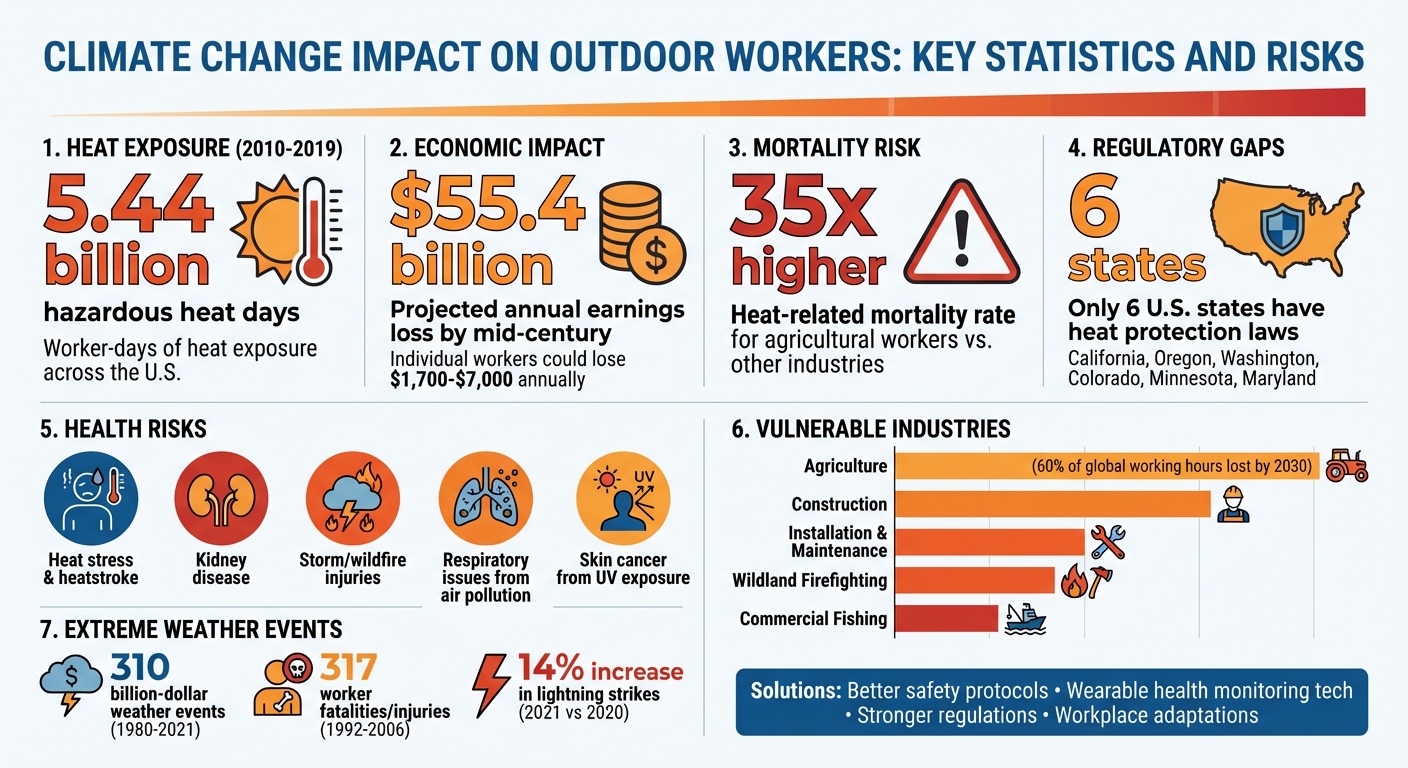
Climate Change Impact on Outdoor Workers: Key Statistics and Risks
How Rising Temperatures Affect Outdoor Worker Health
Heat Stress and Heat-Related Illnesses
Not sure what outdoor role fits you?
Take our 2-minute career quiz to get matched with outdoor jobs that align with your goals, salary target, and lifestyle.
When temperatures rise, the human body struggles to stay cool - especially when high humidity blocks sweat from evaporating efficiently. This can lead to a spectrum of heat-related illnesses (HRI), starting with mild symptoms but escalating quickly into life-threatening conditions. Early signs like heat cramps - painful muscle spasms caused by fluid and salt loss - can progress to heat exhaustion. At this stage, symptoms include heavy sweating, fatigue, nausea, and even confusion. If the body’s core temperature continues to climb unchecked, heatstroke can occur. This is the most severe form of HRI, where the body loses its ability to regulate temperature entirely, posing a critical risk to life.
Outdoor workers, particularly in agriculture, face some of the highest risks. In fact, agricultural workers experience occupational heat-related mortality rates 35 times higher than those in other industries. Workers in construction, installation, maintenance, and farming endure significantly higher heat exposure levels compared to the national average, highlighting the dangers in these physically demanding jobs.
But the dangers don’t stop at immediate illnesses. Chronic exposure to extreme heat is quietly contributing to long-term health issues. Studies have connected repeated dehydration and heat strain to acute kidney injury and chronic kidney disease, especially among laborers in hot climates. As climate change drives up the number of "unsafe workdays" - when the heat index exceeds 100°F - workers face a harsh dilemma: protect their health or secure their paycheck.
Productivity Losses from Heat Exposure
The health risks of extreme heat directly impact workers’ ability to perform, causing significant productivity losses. When temperatures spike, many workers instinctively slow down to protect themselves from overheating - a survival mechanism known as "self-pacing". In some cases, work grinds to a halt entirely when conditions become too hazardous. This trade-off between productivity and safety creates a tough cycle where workers are forced to choose between their income and their well-being.
The economic toll is staggering, especially in certain regions. A 2021 report by the Union of Concerned Scientists revealed that outdoor workers in Texas could face annual earnings losses of $12.2 billion by mid-century, while Florida workers might lose $8.4 billion. On an individual level, outdoor workers risk losing more than $1,700 annually, with those in the hardest-hit areas potentially losing close to $7,000 per year. Globally, the agricultural sector is projected to bear the brunt of these challenges, accounting for 60% of all global working hours lost due to heat stress by 2030.
These combined health and economic pressures underline the urgency of implementing protective measures and adapting workplaces to safeguard outdoor workers from the growing risks of extreme heat.
sbb-itb-9d004f0
Feeling the Heat: Workplace Safety in a Warming World
Extreme Weather Events and Worker Safety
Extreme weather events are becoming more frequent and severe, putting outdoor workers at greater risk.
Injury Risks During Severe Weather
Climate change is intensifying extreme weather, creating dangerous conditions for outdoor workers. From 1980 to 2021, the U.S. endured 310 weather events that each caused at least $1 billion in damages. Between 1992 and 2006, these events led to at least 317 worker fatalities or injuries. The risks vary depending on the industry. For instance:
- Commercial fishing crews face heightened risks of vessel sinkings and reduced survival rates during severe storms.
- Construction workers see a 0.5% increase in traumatic injury risk for every 1.8°F (1°C) rise in the maximum daily humidex.
- Wildland firefighters not only battle flames but also face traumatic injuries and respiratory hazards from inhaling smoke and pollutants.
Lightning activity is also on the rise. In 2021, the U.S. recorded a 14% increase in lightning strikes compared to 2020, with 24 million additional strikes. Even the Arctic saw 7,278 strikes north of 80°N - nearly doubling the total from the previous nine years. Migrant storm chasers, who often lack formal labor protections, are particularly vulnerable, as are workers involved in cleanup efforts after storms. Flooding and storm surges can lead to secondary hazards like mold growth and degraded air quality during restoration tasks.
Long-Term Health Effects from Air Pollution and UV Exposure
While extreme weather poses immediate dangers, prolonged exposure to polluted air and UV radiation presents long-term health challenges. Outdoor workers are especially at risk. For example:
- Wildland firefighters often experience declines in lung function after a fire season due to exposure to wildfire smoke, which contains fine particulate matter (PM2.5), polycyclic aromatic hydrocarbons, aldehydes, and ozone.
- Even ozone levels below the U.S. occupational limit of 100 parts per billion can harm workers.
- Exposure to pollutants like NO₂, PM₁₀, and SO₂ has been linked to hyperuricemia (elevated uric acid levels) in roles such as traffic policing.
Although the Montreal Protocol has helped limit increases in UV-B radiation, outdoor workers remain at higher risk for skin cancer, eye damage, and immune system suppression due to prolonged ultraviolet exposure.
As P A Schulte and colleagues from NIOSH/CDC emphasized:
"Workers are one of the first societal groups exposed to climate-related hazards. Their exposure may be longer and greater than for the rest of the population because often work environments are difficult to modify, work must continue, and tasks must be completed despite changes in climate and weather".
The combined effects of high heat and air pollution further exacerbate these health risks, underlining the urgent need for protective measures.
Current Regulations and Protection Gaps
US Regulations Overview
The United States still doesn’t have a finalized federal heat protection standard for outdoor workers. As of late 2024, OSHA has proposed a rule titled "Heat Injury and Illness Prevention in Outdoor and Indoor Work Settings", but it’s still in the rulemaking phase. For now, OSHA relies on the General Duty Clause of the OSH Act, which provides only limited protections.
In the absence of federal action, only six states - California, Oregon, Washington, Colorado, Minnesota, and Maryland - have implemented their own heat protection standards. California’s regulations, for example, require employers to provide shade, water, and specific high-heat procedures when temperatures exceed 80°F. The proposed federal rule would include similar measures, such as a written Heat Injury and Illness Prevention Plan (HIIPP), access to drinking water, shaded rest areas, and acclimatization protocols for new or returning workers.
However, enforcement of these state standards has been inconsistent. In California, inspections of outdoor workplaces have dropped by 30% since 2017, and violations issued have decreased by about 40% in the same timeframe.
Another major issue is underreporting. Many heat-related illnesses go unrecorded for various reasons - medical professionals may not recognize heat as a contributing factor, or workers, particularly undocumented or low-wage earners, may fear retaliation if they speak up. A study published in Nature Journal emphasized this point:
"The frequency of occupational heat exposure, its disproportionate burden on marginalized workers, and the increasing impact of climate change suggests a critical and urgent need for occupational regulation and surveillance of heat exposure".
Meanwhile, other countries offer more robust protections, providing a stark contrast to the U.S. approach.
International Worker Protection Examples
Globally, some nations have implemented stricter and more measurable heat protections for outdoor workers. Take Qatar, for instance, where outdoor work is banned when the wet bulb temperature exceeds 89.8°F (32.1°C) - a specific, enforceable threshold that surpasses current U.S. proposals. In China, workers are entitled to rest breaks and High-Temperature Subsidies (financial compensation) when temperatures exceed 95°F (35°C), a concept absent from U.S. regulations. Costa Rica goes a step further by including mandatory kidney health monitoring in its occupational health laws, addressing chronic risks that U.S. standards largely overlook. These examples highlight how comprehensive protections can make a difference.
California serves as a case study in the importance of enforcement. After the state increased workplace inspections and citations in 2010, heat-related outdoor deaths dropped by 33% compared to neighboring states like Arizona and Nevada over the next decade. David Michaels, a former OSHA Administrator and professor at George Washington University, explained:
"The finding that the revised standard so successfully prevented worker heat deaths is evidence that a clear, comprehensive workplace standard is an effective tool for saving lives".
Yet, even in states with regulations, gaps remain. Marivel Mendoza, Executive Director of Hijas del Campo, pointed out ongoing challenges:
"I won't say it's every farm...But I will say that there is negligence when it comes to protecting the workers, whether they're hired directly by the farm or they're hired through a contractor".
In some states, conditions are deteriorating. For instance, Texas and Florida have passed laws to block local municipalities from requiring heat protections like water breaks. Without substantial action on climate and worker protections, extreme heat could lead to U.S. outdoor workers losing a collective $55.4 billion in annual earnings by the middle of the century.
Methods to Reduce Climate Risks for Outdoor Workers
Workplace Adaptations and Safety Protocols
Employers have several strategies to safeguard outdoor workers from heat and extreme weather. One effective method is implementing work-rest cycles, which rotate job assignments and schedule physically demanding tasks during cooler parts of the day, such as mornings or evenings. Depending on the time of year and the intensity of the work, these cycles may require anywhere from 2 to 32 minutes of rest per work-hour to ensure worker safety.
Acclimatization programs are another important tool. These programs gradually increase a worker’s heat exposure over 7–14 days, significantly lowering the risk of heat-related issues - from 7.3% to 2.5% for new or returning workers. Employers should also provide workers with cool drinking water and encourage hydration before thirst develops. Portable shade structures and cooling stations can offer much-needed relief during breaks.
A buddy system can be lifesaving. Training workers to watch for signs of heat stress - such as confusion, dizziness, or excessive sweating - creates a layer of protection, especially when individuals may not recognize their own symptoms. Allowing workers to set their own pace is equally important, as it lets them adjust their activity levels based on personal comfort. Additionally, clothing choices can make a big difference. Breathable, light-colored, single-layer garments and broad-brimmed hats help reduce heat stress without compromising safety. While these traditional methods are effective, emerging technologies are now offering even more ways to protect workers.
New Tools and Technologies
Innovative tools are reshaping how heat risks are managed in outdoor workplaces. A notable example comes from a 2024 field study in Florida, where 168 farmworkers participated in research led by Roxana Chicas of Emory University and W. Hong Yeo of Georgia Tech. Workers wore small, bandage-like chest patches that monitored seven biometric markers, including heart rate, skin temperature, blood oxygen levels, and hydration. This data is now being used to train AI systems capable of predicting heat-related illnesses and acute kidney injuries before symptoms emerge. The ultimate goal is a connected alert system that notifies workers via smartphone when their biometrics reach dangerous levels.
"The idea is that we will be able to prevent people from having heat-related illness and heat-related deaths", Chicas explained. "We need tech and policy solutions. ... the objective information provided by the wearable could help remind someone to slow down at a critical point, avoiding dangerous consequences".
The urgency of these innovations is clear. Nearly 50% of Florida farmworkers recorded core body temperatures exceeding 100°F (38°C) during shifts, and 33% experienced acute kidney injury in a single workday. Wearable technology like this provides real-time data that can prevent both immediate health crises and long-term complications. Advanced cooling apparel, such as garments with liquid or evaporative cooling systems or phase change materials, also offers additional relief.
Researchers at the University of Michigan have developed another cutting-edge tool: an interactive map that simulates daily heat exposure for outdoor workers across the United States. This map uses Monte Carlo simulations to combine employment data, metabolic rates, and county-level wet bulb globe temperature (WBGT) readings. It helps employers and regulators pinpoint vulnerable populations and allocate resources more effectively. Switching to WBGT monitoring, which accounts for humidity, solar radiation, and wind speed, provides a far more accurate measure of heat stress than basic air temperature readings. These advancements represent a significant step forward in protecting outdoor workers from the growing risks of extreme heat.
How Job Platforms Support Outdoor Workers
Connecting Workers to Climate-Conscious Employers
Job platforms play a critical role in linking outdoor professionals with employers who prioritize safety and climate-conscious practices. Platforms like Get Outdoor Jobs make it easier for workers to find companies that have established strong Heat Illness Prevention Plans (HIPP) and acclimatization protocols. For instance, companies such as Bechtel, Skanska, Turner Construction, and Balfour Beatty have implemented measures like strict work/rest schedules, specialized training, wearable tech for monitoring, hydration initiatives, and adjusted work hours during cooler parts of the day - all aimed at protecting workers from heat-related risks.
These platforms also allow job seekers to use tailored search filters to find opportunities in states with stricter worker protection laws. In regions with robust safety standards, job seekers can identify employers whose documented measures have effectively minimized heat-related injuries. This is particularly important, as studies show that 50% to 70% of outdoor fatalities occur during the first few days on the job, before workers develop heat tolerance. By focusing on employers with proven HIPP measures and gradual acclimatization periods for new hires, these platforms help mitigate risks tied to rising temperatures and extreme weather.
In addition to connecting workers with safer employers, these platforms offer tools and resources to enhance career development and safety awareness.
Providing Resources for Career Growth and Safety Education
Beyond job placement, career platforms provide essential resources to promote worker safety and career advancement. For example, tools like the NIOSH/OSHA Heat App enable workers to track local heat conditions and recognize when temperatures become hazardous. Many platforms also supply state-specific regulatory information, ensuring that workers understand their rights in different areas.
Educational tools available on these platforms offer guidance on recognizing early signs of heat stress and managing work/rest cycles. For example, NIOSH recommends that at 100°F, workers performing moderate tasks should follow a 45-minute work and 15-minute rest cycle. At 108°F or higher, work should stop altogether. These recommendations align with broader efforts to protect workers from the economic and health impacts of extreme heat, which could lead to an estimated $55.4 billion in lost annual earnings for U.S. outdoor workers by midcentury.
As the Union of Concerned Scientists aptly stated:
"No one should be put in a position where they have to choose between their income and their health".
Conclusion
Climate change is reshaping the realities of outdoor work in America. From 2010 to 2019, U.S. workers faced an estimated 5.44 billion worker-days of heat exposure. If left unchecked, extreme heat could strip outdoor workers of up to $55.4 billion in annual earnings by mid-century. This stark reality highlights a troubling choice many workers face: protecting their health or securing their livelihood.
Addressing this challenge requires action on multiple fronts. Stronger regulations are essential - federal standards must replace the patchwork of heat-specific protections currently enacted in just six states. Technological innovations, like cooling vests, can help keep workers safe by reducing core body temperatures and preventing heat-related injuries. Additionally, workplace adjustments, such as modified schedules and enforced work/rest cycles, could slash the projected economic risks by up to 90%.
Platforms like Get Outdoor Jobs are stepping up to help. By linking workers with companies that prioritize climate-conscious practices and by offering access to safety education, these platforms bridge the gap between policy and on-the-ground realities. As the Union of Concerned Scientists puts it:
"No one should be put in a position where they have to choose between their income and their health".
Together, these efforts aim to protect outdoor workers while driving systemic change. The escalating threats of heat stress, air pollution, extreme weather, and UV exposure disproportionately affect marginalized communities, underscoring the urgency of action. Safeguarding outdoor workers isn’t just about economics - it’s about fairness, dignity, and ensuring no one is left behind as climate challenges grow.
FAQs
What health risks do outdoor workers face because of climate change?
Outdoor workers are increasingly at risk as climate change drives up temperatures. Extended exposure to extreme heat can lead to serious heat-related illnesses, including heat exhaustion and heatstroke. Without timely intervention, these conditions can become life-threatening.
In the U.S., outdoor workers face an alarming disparity in vulnerability. Research indicates they are up to 35 times more likely to die from heat exposure compared to the general population. Beyond heat, the growing intensity and frequency of extreme weather events - like storms and wildfires - add another layer of danger for those working outside.
What steps can employers take to ensure the safety of outdoor workers in extreme heat?
Employers have a responsibility to safeguard outdoor workers from the dangers of extreme heat, and there are several practical steps they can take. Providing plenty of water, access to shade, and regular rest breaks is a must. Additionally, training employees to identify and respond to heat-related symptoms can make a big difference in preventing serious health issues.
Creating a detailed heat illness prevention plan is another smart move. Adjusting work schedules to avoid the hottest parts of the day can also minimize heat exposure. For new or returning workers, implementing acclimatization procedures - a gradual adjustment to working in high temperatures - can help their bodies adapt. Employers might also consider setting up shaded work areas and staying alert to potential climate risks, such as heatwaves. With temperatures on the rise, taking these proactive steps can protect workers and ensure a safer work environment.
Why doesn’t the U.S. have federal heat protection standards for workers?
The United States does not yet have federal heat protection standards, primarily because establishing such regulations through OSHA is a lengthy process often hindered by political pushback and administrative delays. Despite the increasing risks posed by rising temperatures and extreme heat - exacerbated by climate change - a nationwide standard is still absent.
Some states, such as California, have taken the initiative to create their own heat safety rules to safeguard outdoor workers. However, the lack of a unified federal policy underscores the pressing need for more robust protections as climate conditions continue to shift.