
Global Trends in Outdoor Careers 2025

The outdoor job market is growing fast, driven by increased participation, demographic shifts, and global demand for skilled workers. In 2023, outdoor recreation added $639.5 billion to the U.S. economy, supporting 5 million jobs. By 2024, 181.1 million Americans engaged in outdoor activities, with notable growth among underrepresented groups.
Key highlights:
- Economic Growth: The U.S. outdoor industry reached $1.2 trillion in 2025, outpacing sectors like farming and utilities.
- Diversity: Participation among Black Americans rose 12.8%, Hispanic Americans 11.8%, and seniors 7.4% in 2024.
- High-Demand Jobs: Roles in sustainability, logistics, and advanced technologies are on the rise.
- Global Hiring: Companies are recruiting internationally to fill skill gaps, especially in renewable energy and infrastructure.
Millennials and Gen Z prioritize purpose-driven careers, flexibility, and environmental values, pushing employers to adapt to new expectations. The evolving landscape offers opportunities in conservation, adventure guiding, and technical fields, making outdoor careers more dynamic than ever.

Outdoor Recreation Industry Economic Impact and Growth Statistics 2024-2025
Demographic and Participation Trends
Not sure what outdoor role fits you?
Take our 2-minute career quiz to get matched with outdoor jobs that align with your goals, salary target, and lifestyle.
Growth Among Underrepresented Groups
The face of outdoor recreation is changing, with participation becoming more diverse. In 2024, Black participation saw a 12.8% increase, bringing in 2.3 million new participants, while Hispanic participation grew by 11.8%, adding 2.8 million newcomers. This marks a noticeable shift from the traditionally dominant demographics in the space.
Participation among seniors (ages 65 and older) also rose by 7.4% in 2024. At the same time, youth participation (ages 6–12) climbed by 5.6%. These trends are prompting outdoor companies to rethink their strategies - whether in workforce planning, marketing, or product development - to better align with an increasingly diverse consumer base.
The Outdoor Industry Association highlighted this shift:
The new outdoor participant and the young outdoor participant base are significantly more diverse than the total participant base, a formula for long term growth in diversity for outdoor recreation.
–
This diversification is also reflected in "core" participants, or those who frequently engage in outdoor activities. Black core participation grew by 11.4%, and Hispanic core participation increased by 5.7% in 2024. With service-oriented roles making up nearly 75% of jobs in outdoor recreation, this demographic evolution emphasizes the need for a workforce that reflects the changing interests of outdoor enthusiasts. Younger generations, in particular, are shaping trends in outdoor careers with a focus on purpose and values.
Millennial and Gen Z Participation
Millennials and Gen Z are redefining outdoor careers with a focus on purpose and impact. Among young adults aged 18–24, core outdoor participation grew by 6% in 2024. This shift is driven by a growing emphasis on sustainability, inclusivity, and mental well-being. Unlike older generations who often prioritized salary and job stability, 86% of Gen Z and 89% of Millennials say that finding purpose in their work is key to their overall satisfaction and happiness.
Climate concerns are also playing a major role in career decisions. Over 40% of young workers have either switched or plan to switch jobs due to environmental concerns. They’re also looking for flexibility, viewing their careers as a collection of varied experiences rather than a straight path. Many change roles every two to three years to build new skills. This mindset is pushing outdoor employers to adapt by offering remote work options, robust development programs, and clear commitments to environmental responsibility to attract and retain younger talent.
Economic Impact and Job Creation
Outdoor Recreation's Economic Contribution
As of early 2025, the U.S. outdoor recreation economy reached an impressive $1.2 trillion in economic output, making up 2.3% of the nation's GDP. This sector now outpaces farming, mining, and utilities combined in its economic contribution. It also supports 5 million jobs, accounting for 3.1% of the U.S. workforce.
Growth in this sector has outperformed the broader economy. While the overall economy grew by 2.9%, outdoor recreation's real GDP expanded by 3.6%. Employment in the industry also surged by 3.3%, nearly doubling the general job market's growth rate of 1.8%. Jessica Turner, President of the Outdoor Recreation Roundtable, highlighted the significance of this growth:
The new BEA data highlights outdoor recreation as a cornerstone of our economy, generating jobs, supporting small businesses, and providing essential opportunities for Americans to engage with the outdoors for health, connection, and quality of life.
–
The sector's resilience is equally noteworthy, with a 36% real growth since 2012. Activities like hiking, camping, and fishing have seen a surge in popularity, gaining over 2 million new participants leading into 2025. In New Hampshire alone, the outdoor industry supported 31,917 jobs, which made up 4.5% of the state’s workforce, while contributing $1.7 billion in wages.
This steady growth has driven a shift toward more specialized, year-round roles, reflecting the industry’s evolving nature.
High-Demand Roles in Outdoor Sectors
The job market in outdoor recreation is moving beyond traditional seasonal roles in hospitality. Permanent, higher-paying positions are on the rise, including technical specialists, corporate sustainability experts, and recreation managers. For example, the average annual wage in outdoor-related information services is $143,000, significantly higher than the $46,000 average in arts, entertainment, and hospitality. Megan Lawson, Ph.D., of Headwaters Economics, explained:
The types of jobs with the fastest growth within outdoor recreation tend to be year-round and have higher wages and benefits than hospitality jobs, which are more often seasonal and lower wage.
–
Climate adaptation is also driving job creation. Ski resorts, for instance, are investing in advanced snowmaking and trail grooming technologies to address warming winters.
Farmington, New Mexico, provides a compelling example of this economic transformation. Historically reliant on fossil fuels, the city enacted a 0.25% sales tax to fund outdoor recreation initiatives, focusing on infrastructure and workforce development. This shift reflects a broader trend of using outdoor recreation to diversify local economies nationwide.
Global Influences on Outdoor Jobs
Cross-Border Job Opportunities
The outdoor industry's heavy reliance on international supply chains is reshaping how and where jobs are created. In 2023, retail trade contributed $156.3 billion - or 24.4% - to the sector’s total value, highlighting the importance of effective global logistics to ensure products reach consumers on time. This growing dependency has transformed roles like supply chain managers and railway technicians from behind-the-scenes support jobs into essential positions that keep the industry running. As labor shortages emerge in these fields, global recruitment is becoming a key strategy for employers.
Countries such as Germany, Canada, and Japan are addressing these shortages by actively recruiting international talent through streamlined visa programs. Germany’s EU Blue Card and Canada’s Express Entry system, for instance, are designed to attract technical and logistics specialists. In fact, supply chain management is projected to be one of the top 10 in-demand careers abroad by 2025.
Meanwhile, large-scale projects in developing economies are also creating opportunities for cross-border job movement. Energy and construction mega-projects often require foreign engineers and technical experts, making certifications like the PMP a valuable asset for professionals looking to compete globally. While English remains the primary business language, fluency in German, French, or Arabic can provide a significant edge in international markets.
Sustainability Trends Creating New Jobs
Eco-conscious practices are reshaping job roles across the outdoor industry, especially as participation in outdoor activities continues to rise. In 2024 alone, activities like hiking and camping saw more than 2 million new participants, increasing pressure on natural resources. This has amplified the demand for sustainable land management and conservation experts. Brands are also stepping up, prioritizing smarter designs for sustainable products, which has opened up career opportunities for professionals such as sustainability specialists, renewable energy technicians, solar panel installers, and wind turbine engineers.
sbb-itb-9d004f0
Finding Global Outdoor Career Opportunities
Using Get Outdoor Jobs to Find Roles
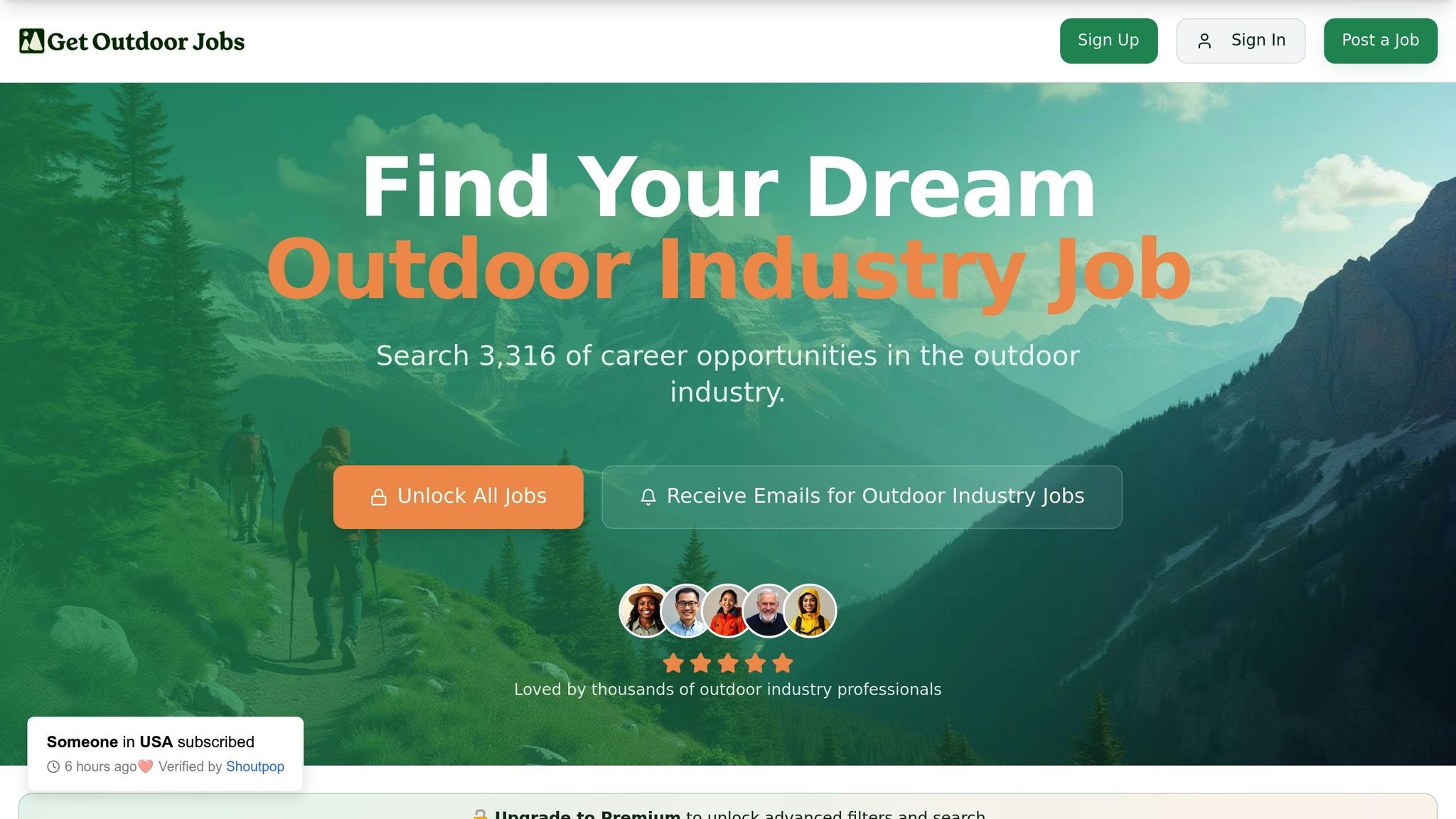
The outdoor recreation industry in the United States supports an impressive 5 million jobs and is valued at $1.2 trillion. This creates a wealth of opportunities for job seekers across various roles. However, navigating this vast job market can be overwhelming without the right tools to help you filter through countless listings to find positions that align with your skills and preferences.
Get Outdoor Jobs simplifies this process by aggregating outdoor industry positions and offering search filters tailored to specific needs. You can narrow down opportunities by categories like "Travel Jobs", "Multiple Locations", or "Jobs with Housing" - ideal for those pursuing seasonal or cross-border roles. The platform is updated daily, ensuring access to the latest openings in fields like conservation, adventure guiding, environmental services, and administrative work. This centralized approach aligns with the growing trend of companies expanding their talent searches globally, connecting job seekers with roles beyond their local markets.
In addition to job listings, some platforms provide Career Insights, offering tools like wage visualizations and demand projections. These resources help you identify roles with strong growth potential, making it easier to focus on sustainable career paths. Matching your skills with industry demands is crucial when exploring opportunities in this expanding global market.
Building a Global Outdoor Career
As the outdoor industry becomes increasingly global, employers are shifting their focus from traditional job titles to specific skills. In fact, 53% of HR leaders now prioritize skills-based hiring, reshaping how candidates are evaluated. This means your resume should emphasize your abilities - such as GIS mapping, proficiency in AI, or expertise in eco-friendly practices - rather than simply listing past job titles.
In today’s interconnected job market, showcasing specialized skills and maintaining a strong online presence are more important than ever. For example, AI-related skills can command a 56% wage premium, while sustainability expertise is in demand as 81% of consumers prioritize eco-conscious practices. Interestingly, only 14% of employees currently use generative AI tools daily, giving early adopters a competitive edge. Highlighting your environmental knowledge and technical skills can set you apart in international markets.
Social media platforms like TikTok and Instagram have also become key networking tools for outdoor professionals. With 55% of Gen Z consumers making purchases directly through these platforms, they’ve evolved into discovery hubs for outdoor brands. By sharing your expertise, projects, or field experiences on these channels, you can connect with potential employers and expand your professional network. Additionally, international markets, such as Japan’s outdoor equipment sector - which is projected to reach $3.5 billion by 2025 - demonstrate the growing global demand for outdoor professionals.
How To Land A Dream Job In The Outdoor Industry
Conclusion
The outdoor job market in 2025 is being shaped by three major forces: globalization, demographic shifts, and a focus on sustainability. With 67% of executives prioritizing global expansion and 84% struggling to find skilled talent locally, companies are increasingly building global talent pipelines to address these challenges. This shift opens doors for outdoor professionals to pursue opportunities across continents, including renewable energy projects in Latin America and cutting-edge sustainable design initiatives.
Demographic trends are also fueling growth in the industry. In 2024, participation among Black Americans rose by 12.8%, while Hispanic Americans saw an 11.8% increase. Additionally, senior participation grew by 7.4%, and youth engagement climbed by 5.6%. This multigenerational and diverse customer base is driving demand for specialized roles that cater to varying experience levels, while also emphasizing the need for sustainability-focused expertise.
Sustainability has become a defining factor in career opportunities within this $1.2 trillion industry. Roles now integrate sustainability with environmental justice, alongside technical positions for ecologists and resource managers. As John Alexander from JobsPikr points out:
Remote work has made geography less relevant. Many organizations now hire talent from anywhere, which increases diversity but also intensifies competition for jobs.
–
Looking ahead, 46% of employees view global companies as more secure in the face of local economic challenges. Success in this evolving market will hinge on skills-based hiring, digital proficiency, and sustainability credentials. For professionals in fields like conservation, adventure guiding, and sustainable infrastructure, the outdoor industry offers growing opportunities to thrive in a globally connected, diverse, and eco-conscious landscape.
FAQs
What skills will be most in demand for outdoor careers in 2025?
In 2025, outdoor employers will focus on a blend of technical know-how and strong interpersonal skills. On the technical side, sought-after abilities include GIS mapping, analyzing environmental data, understanding renewable energy systems, and mastering low-impact trail-building methods. There's also a growing demand for professionals with expertise in AI, big data, and cybersecurity to improve operations and safeguard sensitive field data.
At the same time, soft skills are equally crucial. Collaboration, time management, and effective communication are highly valued. Jobs in conservation, guiding, and park management often require cultural awareness, excellent customer service, and the ability to lead diverse teams. Platforms like Get Outdoor Jobs are helping job seekers connect with roles that match these evolving needs in the outdoor industry.
How is increasing diversity shaping the outdoor job market?
The outdoor job market is evolving, thanks to the increasing involvement of historically underrepresented groups. Recent statistics highlight that Black Americans and Hispanic Americans are among the fastest-growing groups of outdoor enthusiasts. This shift is broadening the talent pool, bringing in a more varied set of skills and perspectives that employers can tap into. To adapt, many companies are rolling out diversity, equity, and inclusion (DEI) initiatives aimed at attracting and keeping this diverse talent while addressing the skills gap that many employers have identified.
Breaking down stereotypes about outdoor careers and improving access through flexible work policies and skill-training programs are also helping to make these roles more attainable. For job seekers, Get Outdoor Jobs serves as a one-stop platform, offering thousands of opportunities, including positions that prioritize DEI and flexible work setups. This makes it easier for individuals from diverse backgrounds to discover rewarding careers in the outdoor industry.
What global career opportunities are available for outdoor industry professionals?
The global market for outdoor jobs is booming, with a growing need for professionals in fields like adventure guiding, eco-tourism, conservation, and renewable energy. Countries such as Canada, New Zealand, Australia, Costa Rica, and various parts of Europe are experiencing a surge in outdoor-focused roles. This growth is fueled by a shift toward sustainable recreation and climate-aware infrastructure projects.
In the United States, the outdoor recreation economy is a powerhouse, valued at nearly $1 trillion. It supports millions of jobs and plays a key role in the international exchange of talent. Some of the most in-demand positions include marine technicians, park rangers, and conservation specialists, all of which often attract candidates from around the world. Employers are especially interested in skills like multilingual communication, digital marketing, and technical know-how related to outdoor equipment.
For those eyeing opportunities abroad, Get Outdoor Jobs offers a streamlined way to explore thousands of listings. Whether you're searching for remote, hybrid, or on-site roles, this platform makes it easier to navigate the global job market. It also helps professionals factor in important details like local salaries and visa requirements.