
Travel Fatigue in Outdoor Careers: Causes and Solutions

Travel fatigue is a deep exhaustion caused by frequent travel, extended hours, and physically demanding work. For outdoor professionals, this isn't just tiring - it can reduce focus, impair decision-making, and increase safety risks. Key causes include disrupted sleep, long work hours, poor nutrition, dehydration, and repetitive travel.
Quick Takeaways:
- Sleep Disruptions: Jet lag and pre-trip stress lead to poor rest.
- Long Hours: Back-to-back assignments with little recovery time.
- Physical Strain: Heavy gear, tough terrain, and extreme weather.
- Dehydration: Low cabin humidity and high-altitude conditions worsen fatigue.
- Burnout: Constant travel reduces mental recovery and weakens immunity.
Solutions:
- Plan Smart: Add rest days, limit destinations, and set work boundaries.
- Improve Sleep: Adjust schedules, use melatonin, and create a restful environment.
- Stay Hydrated: Drink water regularly and use electrolytes in hot climates.
- Eat Better: Focus on nutrient-dense snacks and balanced meals.
- Stay Active: Stretch, walk, or do light exercises during travel.
Managing travel fatigue requires small, consistent changes to protect energy, health, and safety while staying effective in the field.
Not sure what outdoor role fits you?
Take our 2-minute career quiz to get matched with outdoor jobs that align with your goals, salary target, and lifestyle.
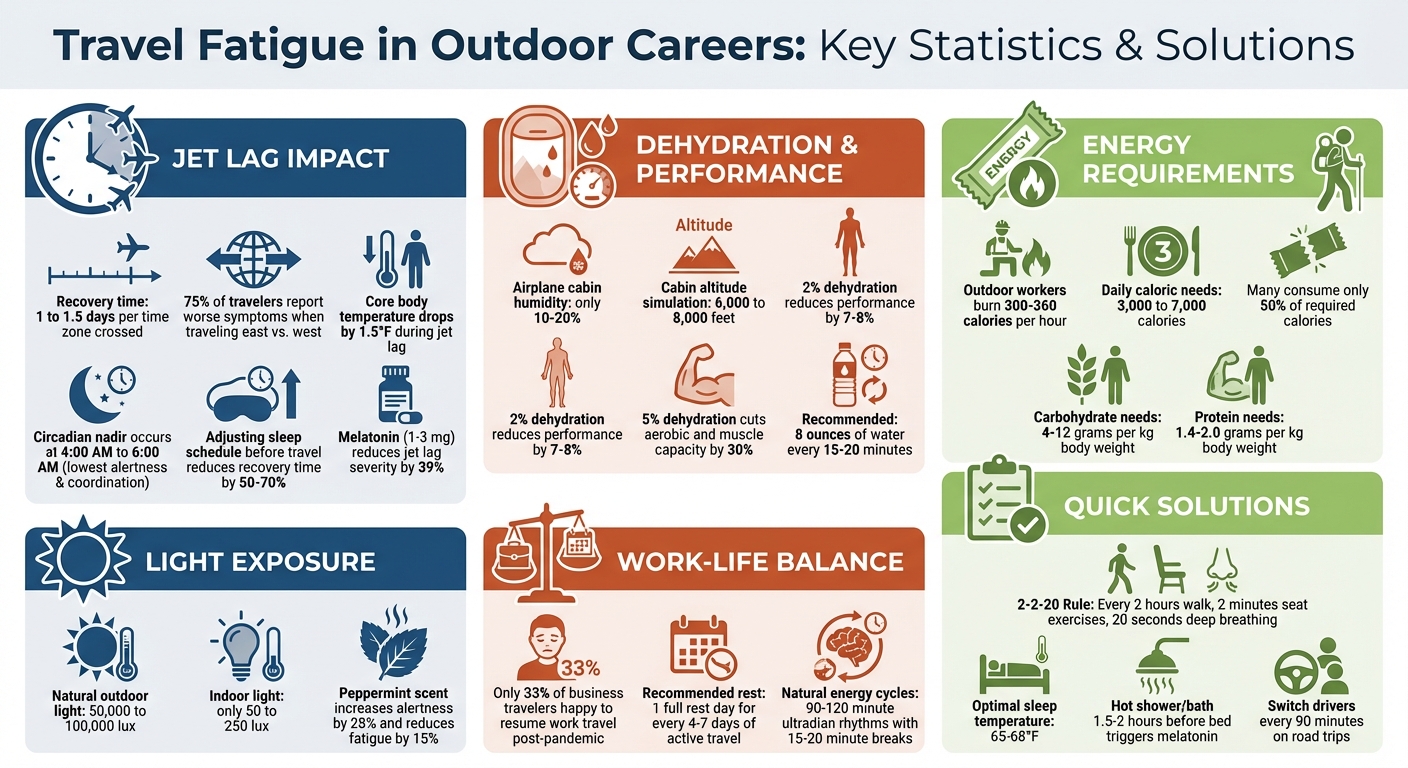
Travel Fatigue Statistics and Recovery Strategies for Outdoor Professionals
Main Causes of Travel Fatigue in Outdoor Careers
Travel fatigue can be a significant challenge for outdoor professionals, stemming from a combination of physical, mental, and environmental stressors. It's not just about spending long hours on the road - it's about the cumulative effects of these factors over time. Let’s break down the main contributors to this issue.
Jet Lag and Poor Sleep
Crossing time zones throws off your circadian rhythm - the internal clock that governs sleep, hormones, and metabolism. On average, it takes 1 to 1.5 days to adjust per time zone crossed. For instance, a field biologist flying from California to the East Coast may need three or four days to fully acclimate. Interestingly, about 75% of travelers report worse symptoms when heading east rather than west, as flying east shortens the day and forces you to sleep earlier than your body is ready for [15, 16].
"Jet lag is not just a matter of feeling tired or groggy - it reflects a systemic disruption of physiology."
- Andrew Parks, DC
Jet lag affects more than just sleep. Your core body temperature can drop by about 1.5°F, which impacts physical performance. This drop typically occurs during the early morning hours (4:00 AM to 6:00 AM), when alertness, coordination, and reaction times are at their lowest. Working during this "circadian nadir" can increase the risk of injuries in physically demanding roles.
Pre-trip stress also plays a role. The rush to finish work, pack gear, and coordinate logistics often leads to "sleep debt" before the journey even begins.
"The lead-up to a trip is often the most stressful part... sleep quality can be affected due to stress and mental overload. By the time the trip starts, a sleep debt has already been built up."
- Maryanne Taylor, Founder and Sleep Consultant, The Sleep Works
Long Work Hours and Extended Trips
For outdoor professionals, extended work hours can quickly drain energy reserves. Unlike traditional jobs with set schedules, these roles often involve back-to-back assignments with little time to recover. A wilderness guide, for example, might finish a seven-day backpacking trip, take a two-day break, and then head out for another week-long expedition. This relentless pace leads to cumulative fatigue.
"Travel fatigue occurs in all travelling athletes and can be acute following any individual long journey, or chronic (cumulative) as a consequence of repetitive travel within a season."
- Dina C Janse van Rensburg, MD, PhD, Section Sports Medicine, University of Pretoria
The sudden transition from inactivity during travel to physically demanding tasks - like carrying heavy gear or setting up camp - only adds to the exhaustion [4, 14].
Weather and Physical Stress
Outdoor work often involves adapting to sudden climate changes or high-altitude conditions. Moving from a cold Montana winter to a humid Florida summer, for instance, requires your body to adjust to new environments while also dealing with jet lag [14, 20]. Airplane cabins, which simulate altitudes of 6,000 to 8,000 feet, further complicate matters by lowering oxygen levels and impairing both physical and cognitive performance.
Long periods of sitting during flights or drives can cause muscle stiffness, leg swelling, and soreness. Cabin humidity levels - typically only 10–20% - lead to dehydration, which can worsen headaches, fatigue, and brain fog [4, 15, 18].
Poor Nutrition and Dehydration
Maintaining proper nutrition and hydration during outdoor expeditions is no easy task. Field rations and trail foods often lack the nutrients needed for sustained physical activity. When you're constantly on the move, it's easy to skip meals or fail to consume enough calories to match your energy output.
Dehydration is another common issue, especially in dry climates or at high altitudes where fluid loss happens faster. This can impair cognitive function and increase muscle soreness, making recovery even more difficult.
Repetitive Travel and Overwork
Constant travel can lead to burnout, characterized by chronic exhaustion and irritability that even a good night's sleep can't fix. When travel becomes routine, the excitement fades, and the process starts to feel like a grind. Outdoor professionals who repeatedly follow the same routes or take on similar assignments often experience "travel burnout."
"Travel burnout occurs when you travel at a consistently fast pace... you become uninspired by places that many dream of visiting and you just crave a bit of the normality you've been so desperate to get away from."
- Alex Brown, Long-term Traveler and Writer
This kind of fatigue can weaken your immune system and disrupt inflammatory processes, increasing the risk of illness [4, 19]. Remote work setups add another layer of stress, as professionals often find themselves checking emails or planning logistics during transit. This constant state of alertness prevents true mental recovery, which is essential for peak performance and safety in the field.
How to Prevent and Reduce Travel Fatigue
Travel fatigue doesn’t have to be a given. These strategies can help you maintain energy and perform at your best while on the move.
Plan Better Work Schedules
Take it slower. Instead of cramming multiple destinations into one trip, consider staying in fewer places for longer. This "slow travel" approach minimizes the stress of constant packing and adapting to new surroundings, giving you time to recover.
Schedule buffer days after long trips. These rest days let you unwind, adjust to new time zones, and physically recharge. A good rule of thumb? Plan at least one full rest day for every four to seven days of active travel. This can help stave off the kind of exhaustion that builds up over time.
If traveling east, adjust your sleep schedule ahead of time. Shifting your bedtime by an hour per day for three days before departure can reduce recovery time by 50–70%. Dr. Michael Breus, a Clinical Psychologist and Sleep Specialist, advises:
"Shift your bedtime by 30 minutes each night toward your destination's time zone. It's like giving your circadian clock a gentle nudge instead of a violent shove."
Set clear work boundaries during travel. Block off "no-meeting" times and avoid checking emails while in transit. For road trips, take turns driving every 90 minutes to match natural energy cycles and avoid accidents.
While planning is key, prioritizing sleep is equally important for combating fatigue.
Improve Your Sleep Quality
Sleep disruptions are common on the road, but you can take steps to improve rest. Keep your sleep space comfortable: aim for a cool room temperature (65–68°F), use blackout curtains or a sleep mask, and block noise with earplugs or white noise.
Use light exposure to reset your internal clock. If you’re traveling east, seek bright sunlight in the morning within 30 minutes of waking. Heading west? Get light exposure in the late afternoon. Eating your first breakfast at your destination’s local time also helps. As Michael Gulmann from Otto the Agent explains:
"Your first breakfast at destination time resets your body clock faster than any supplement."
A hot shower or bath 1.5 to 2 hours before bed can trigger melatonin release as your body cools down afterward, making it easier to fall asleep. For jet lag, consider 1–3 mg of melatonin 30 minutes before your target bedtime - it’s been shown to reduce jet lag severity by 39%. Always consult a doctor before using supplements.
Avoid intense exercise close to bedtime, as it can leave you too energized. Instead, aim for moderate activity four to six hours before sleep. If you wake up in the middle of the night, resist calculating how much sleep you have left; this can spike stress and make falling back asleep harder.
Proper nutrition and hydration also play a big role in managing fatigue during travel.
Eat Well and Stay Hydrated
Traveling, especially for physically demanding work, burns far more energy than desk jobs. Outdoor workers can burn over 300–360 calories per hour, sometimes requiring 3,000 to 7,000 calories daily. Yet many fall short, consuming only half of what they need.
Focus on complex carbohydrates like whole grains, sweet potatoes, and quinoa for long-lasting energy. Simple carbs, such as fruit snacks or white bread, can provide quick bursts of energy when needed. Depending on your activity level, aim for 4–12 grams of carbs per kilogram of body weight and 1.4–2.0 grams of protein per kilogram to support muscle repair.
Snack frequently instead of relying on three large meals. Eating small, nutrient-dense snacks every hour - like nuts, fig bars, or nut butter packets - keeps blood sugar stable and prevents energy crashes. When packing for remote work, choose high-calorie, lightweight foods such as jerky, dried fruit, tuna foil pouches, or trail mix.
Hydration is just as critical. Even mild dehydration (2% of body weight) can reduce performance by 7–8%, while more severe dehydration (5%) can cut aerobic and muscle capacity by 30%. Sip 8 ounces of water every 15–20 minutes rather than drinking large amounts all at once. Business consultant Mark Thompson shares his hydration strategy:
"I drink 8 ounces of water for every hour of flight time, plus an extra 16 ounces before boarding. Sounds like a lot, but I arrive feeling human instead of like a raisin."
For activities in hot or humid conditions lasting over two hours, use electrolyte-rich drinks or powders to replace salt lost through sweat. Check your urine color - it should be as clear as possible. Limit caffeine and alcohol, as both can disrupt sleep and worsen dehydration.
These adjustments not only keep fatigue at bay but also support a healthier balance between work and recovery during travel.
Managing Fatigue While Traveling
Traveling can be exhausting, but staying energized and alert is possible with the right strategies. Whether you're hopping across time zones or driving to a remote job site, these tips can help you manage fatigue effectively.
Stay Active
Movement is a powerful tool against travel fatigue. Long periods of sitting can leave you feeling stiff and sluggish, but simple activities can make a big difference. Try the "2-2-20 rule" on flights: every 2 hours, take a walk to the bathroom; spend 2 minutes doing seat exercises like ankle circles or calf raises; and dedicate 20 seconds to deep breathing with overhead stretches. This routine promotes circulation and helps combat stiffness.
If you're working solo in the field, schedule short walking or stretching breaks every couple of hours. Even a quick 5-minute walk can refresh your mind and improve focus. Before long stretches of sitting, consider light exercise like a jog or bike ride to alleviate stress. Just steer clear of intense workouts that might weaken your immune system.
While physical activity keeps your body in check, managing light exposure is essential for handling jet lag.
Reduce Jet Lag Effects
Bright outdoor light can help reset your internal clock. Natural light ranges from 50,000 to 100,000 lux, far surpassing the 50 to 250 lux typically found indoors. When traveling east, get outside in the morning within 30 minutes of waking and avoid evening light. If you're heading west, flip the script - limit morning light and seek it in the late afternoon. Dr. Jamie Zeitzer, a Stanford University professor, explains why this matters:
"Having to respond to mental challenges when their brains are prepared to sleep puts them at reduced cognitive capacity and can result in impaired reaction time and decision-making."
Keep naps short - 20 to 30 minutes - to avoid interfering with your local sleep schedule. If you nap during the day, try doing so outdoors or near natural light to avoid slipping into deep sleep. Apps like Timeshifter and StopJetLag can guide you on when to adjust your light exposure and caffeine intake based on your flight details.
Pack Comfort Items
Creating a familiar environment can ease the stress of constant travel. Familiar items bring comfort during transitions. Pack a lightweight scarf, a travel-sized scent you enjoy, or your favorite snacks to evoke a sense of home.
For better rest while in transit, bring essentials like an eye mask, earplugs, and a neck pillow to create a sleep-friendly setup. Compression socks can improve circulation on long flights, while loose-fitting clothing minimizes discomfort. Don't forget a refillable water bottle and electrolyte packets - airplane cabins have humidity levels as low as 10–20%, which can leave you dehydrated.
Aromatherapy offers a quick mental boost. Peppermint scents, for instance, can increase alertness by 28% and reduce fatigue by 15%. A small bottle of peppermint or eucalyptus essential oil can be a travel-friendly way to clear mental fog instantly.
Use Technology and Job Resources
Technology can be a game-changer for managing fatigue. Fatigue-tracking apps like Timeshifter and Entrain can help you optimize your schedule, guiding you on light exposure, caffeine intake, and sleep timing based on your travel plans.
If frequent travel is taking a toll on your energy, it might be time to reassess your role. Platforms like Get Outdoor Jobs (https://getoutdoorjobs.com) allow you to filter for remote, hybrid, or onsite positions that better align with your energy levels. Finding a role that matches your capacity can help you stay engaged in the outdoor industry without risking burnout.
sbb-itb-9d004f0
Building Long-Term Energy Management Habits
Traveling for work can be exhausting, but creating habits that prioritize energy management can make a world of difference. Think of recovery not as a reward for completing tasks but as an essential part of staying at your best. Our bodies naturally follow 90–120 minute energy cycles, known as ultradian rhythms. By balancing focused work periods with 15–20 minute breaks, you can help stave off burnout and keep your energy steady.
Build Recovery Into Your Routine
One of the most effective ways to stay energized is to schedule recovery time as a non-negotiable part of your day. Plan specific rest days during travel when no major work tasks are on your plate. These breaks give your body and mind a chance to reset, especially if you reduce constant transitions and allow for longer periods of rest.
Daily rituals can also provide a sense of stability, no matter where you are. Something as simple as enjoying a morning coffee, journaling for 10 minutes, or doing light stretches can signal your brain to shift gears between work and relaxation. Photographer and full-time traveler Kassie Duggan puts it perfectly:
"Overcoming travel burnout is about minimizing change and stimulation so your nervous system can catch up and recalibrate."
Work-life boundaries are another key piece of the puzzle. For remote workers, this might mean setting fixed hours for work and sticking to a designated workspace - even if it’s just a specific table at a café. Incorporating light physical activity like walking, yoga, or stretching can also help you stay active without adding to your fatigue.
If you find that your current job structure makes recovery difficult, it might be time to take a closer look at your career setup.
Find Jobs With Better Work-Life Balance
Sometimes, the key to long-term energy management lies in rethinking your career path. If constant travel is wearing you out, consider roles that offer a better balance. Not all outdoor careers require endless movement. Websites like Get Outdoor Jobs (https://getoutdoorjobs.com) make it easy to search for remote, hybrid, or low-travel positions that align with your lifestyle goals. Whether you’re looking for a stable conservation role or an administrative position you can tackle from home, finding the right fit can help you stay connected to the outdoor industry while avoiding burnout.
Interestingly, only 33% of business travelers reported being happy to resume work travel after the pandemic, which shows a growing preference for roles with more balance. Advanced job search tools can help you pinpoint positions with fewer travel demands or more flexible schedules - both of which can greatly improve your long-term well-being.
Conclusion
Travel fatigue - caused by disrupted sleep, physical strain, and the mental toll of constant movement - poses a serious challenge for those in outdoor careers, often affecting performance and overall well-being. Whether it's battling jet lag, poor sleep quality, or the endless cycle of decision-making, these issues are common but can be addressed.
Exhaustion doesn’t have to be the norm. Simple adjustments like prioritizing restful sleep, staying hydrated, and incorporating regular physical activity can make a noticeable difference. Small habits, like morning stretches or keeping a journal, can help establish a sense of stability, even when your environment changes frequently. Managing travel fatigue isn't just about quick fixes - it also involves thoughtful, long-term strategies. Adding buffer days between demanding work periods, creating a consistent home base whenever possible, and seeking opportunities that align with a healthier work-life balance are all steps that can help.
Recovery is just as important as the work itself. By taking these steps, outdoor professionals can maintain their energy, boost productivity, and stay passionate about their careers.
FAQs
How can I tell if I have travel fatigue or burnout?
Travel fatigue manifests as ongoing tiredness, irritability, low motivation, and trouble focusing, typically after long trips. Unlike jet lag, it doesn’t go away with rest. Burnout, on the other hand, is more severe and builds over time, showing up as emotional exhaustion, loss of interest in activities, and a persistently low mood. Spotting these symptoms early is key to taking steps to protect your mental and physical health.
What’s the fastest way to reduce jet lag for fieldwork?
Adjusting to a new time zone for fieldwork can be challenging, but a few proactive steps can help you bounce back from jet lag more quickly. Start by shifting your sleep and meal times a few days before your trip to match your destination's schedule. This pre-adjustment can make the transition smoother.
Once you arrive, sunlight exposure becomes your ally. Spending time outdoors helps reset your internal clock, signaling your body to adapt to the new time zone. Another trick? A cold shower in the morning or evening. It not only sharpens your alertness but also helps regulate melatonin levels, which play a key role in your sleep cycle.
By combining these simple, science-backed methods, you can recover faster and get back to being productive.
How do I plan rest days without falling behind on assignments?
To make the most of rest days, try scheduling them during times when your workload is lighter or right after completing challenging tasks. Establish routines with clear boundaries - like setting specific times for rest - to help you recharge and stay focused. Even a short break outdoors, such as a 30-minute walk, can help reduce fatigue and improve your overall productivity. If necessary, communicate your schedule ahead of time to ensure you can balance rest with assignments without losing momentum.